
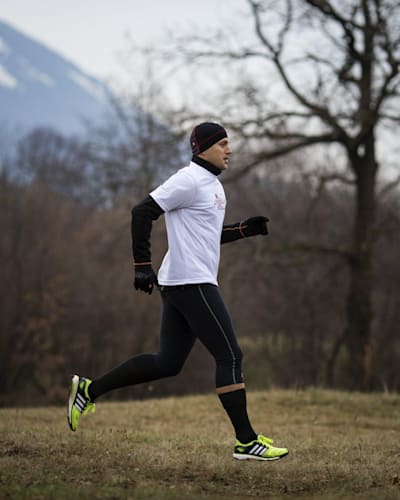
Running
Running in winter: How to breathe better in the cold
When running in winter, you should adapt your breathing to the temperature. How do you do this and why is it important? Our athletes will tell you!
How healthy is running in the cold? Don't you catch a cold quickly if you go running in temperatures below 0°C? On the contrary! If you go running regularly in winter, you strengthen your immune system and respiratory tract. However, this only applies to temperatures down to -10°C. Doctors and scientists agree that below this temperature, the body is no longer able to warm the inhaled air sufficiently before it reaches the bronchial tubes.
What can you do when running in winter to further prevent respiratory infections caused by cold air? Flo Neuschwander and Johanna Holzmann have the answer!



01
Wear a tube scarf and the right clothing

Johanna Holzmann braves the cold at Red Bull All In.
© Flo Hagena / Red Bull Content Pool
In winter, almost all athletes swear by wearing a tube scarf. Ski cross athlete Johanna Holzmann also relies on it when doing sports in the cold: "I run in winter with my Buff pulled over my ears and chin, but my mouth and nose are always uncovered." If you like it a little warmer around your mouth and nose, you can also pull the tube scarf over your mouth and nose.


02
Breathe in through your nose and out through your mouth

Florian Neuschwander, Grossglockner Mountain Run
© Antton Miettinen
Another point that most athletes agree on: If you go running in winter despite the cold temperatures, you should definitely breathe in through your nose and out through your mouth. Even if this isn't always feasible, especially for amateur athletes, it's worth doing it for as long as you can. Flo Neuschwander knows why: "When you breathe in through your nose, the air is preheated and filtered. The mucous membranes, throat and bronchial tubes are less irritated by the slightly warmed breathing air."
Breathing in through the nose preheats the air!

To be able to take in more oxygen despite breathing through your nose, Johanna Holzmann recommends: "Breathe out more through your mouth and breathe deeply into your diaphragm when breathing in through your nose."
03
Take it slow and avoid overly intense exertion
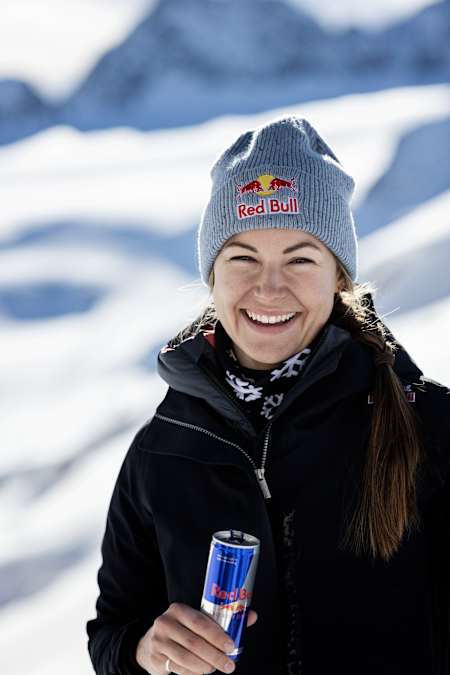
Johanna Holzmann is ready for new challenges.
© Richard Walch / Red Bull Content Pool
If you go running in winter, the following applies: take it slow, steady and easy. This starts with a moderate warm-up, which you should definitely do to warm up slightly before you start running, and continues with the actual training run. The more intense the exertion, the faster, deeper and stronger the breathing, which irritates the airways more than necessary at sub-zero temperatures. This is particularly true for amateur athletes.
Professionals like Johanna Holzmann can do intensive units, but then they have to pay particular attention to their energy levels.
The body consumes additional energy in the cold, and this must not be forgotten.
04
Take a relaxed breath after training

Johanna Holzmann knows what is important when it comes to regeneration.
© Helge Roeske
Even if it doesn't directly affect your breathing when running, Johanna Holzmann insists that you should look after yourself particularly quickly and particularly well after exercising in the cold: "You should get changed straight after a session in the cold so that you are warm and dry." A warm drink, good food and conscious, relaxed breathing round off the winter regeneration kick-off!
And if that's all too strenuous for you, you can of course also run indoors in winter - on the treadmills from KETTLER. Whether with or without an incline, as preparation for the Wings for Life World Run or a crisp session during your lunch break, anything is possible.


