


Gaming
esports
Picking the right Fighting Game for you
The fighting game genre is so packed with iconic franchises and creative indie games that it makes choosing the game to invest your time in paralyzing. Here’s some help.
To choose the right fighting game for you, start by picking what looks cool. This requires you to watch games. This could be through whoever’s streaming it, watching or attending big tournaments, or even helpful YouTube channels. Going to your locals is maybe the best way to get used to different games and getting other people’s perspectives on them, being able to ask questions in real time and even hop in the rotation.
Narrow down your choices
There are so many moving pieces within a single fighting game, which is why even two games with many surface level similarities can be absolutely divisive for certain people. But before we can compare games, we have to break them down into categories.
Visual Style
We all want to act like objective game play analyzers but, at the end of the day, we want to play a game we like looking at. A game needs to draw you in however it can.
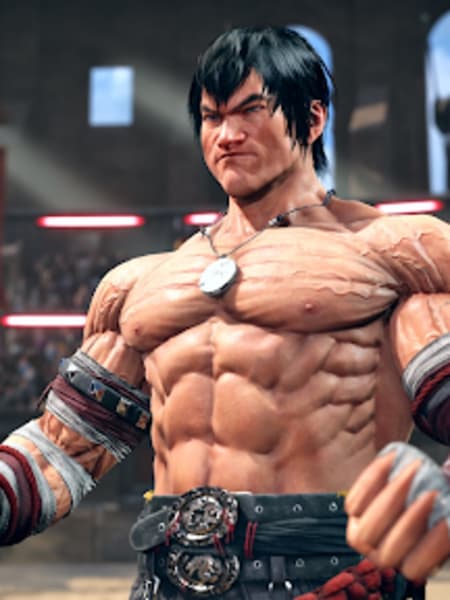
The more realistic look of 3D games such as modern day Tekken and Street Fighter appeal to those who want to see lifelike gameplay along with the iconic fighting styles.
On the flipside there’s bombastic animation and sprite work of games like Persona 4 Arena, Marvel vs Capcom 2, which are still playable and accessible.
This is a highly qualitative, personal decision, but easily one of the most important ones for most people.
Neutral
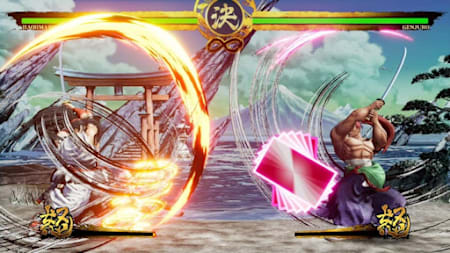
SamSho is neutch city
© SNK Corporation
In most games, you will spend a large portion of your time in neutral. Deciding the speed and type of neutch you want to play is key. The act of getting in on your opponent or warding off their approaches changes drastically depending on the game.
Speed ranges from games like Samurai Showdown, with its methodical, slow paced hefty sword slashes in neutral, to anime games with air dashes taking you straight into your opponent’s face like BlazBlue and Guilty Gear.
There are so many ways for the neutral to look different between games. Team games and tag games have assists and active switch, and many other titles have their own unique mechanics like KOF15’s armoured Shatter Strike.
To many people, the neutral game IS fighting games, picturing the iconic Street Fighter ground game when they think of the genre, so it’s an important piece to factor into your decision. As a huge part of the game, it will define much of your experience, and will reflect what you are willing to deal with as a player. If you don’t want to partake in fireball wars and would rather get right to blows, maybe you might pick Tekken rather than Super Turbo .
Pressure Game
After winning neutral, unless you hit a touch of death, you probably have a little more work to do. Transitioning into a pressure game from neutral is absolutely necessary for a complete offensive arsenal, and the type of offensive pressure a game has is a make or break characteristic for many players.
There are games like SFV where enforcing frame advantage with plus on block moves and punishing overly respectful opponents with grabs, sets you up for a big damage combo when they get antsy and disrespect your frame traps. Tekken is also a game with a major focus on establishing your pressure as Anakin describes here.
That’s not to say that's all you can do in those games, though. The Mishima characters in Tekken exist to mix up the opponent’s block with their low Spinning Demon (better known as Hell sweep).
Some games are built almost entirely off of mixups. Characters in Guilty Gear do employ frame advantage, but that game is all about 50/50s: either on block or as okizeme. Skullgirls, Marvel vs Capcom, Blazblue Cross Tag Battle, and many other team/tag games use assists to serve as cover for the point character to move around and deliver mix ups or keep risky options safe.
Figuring out the type of pressure you’d like to hit people with will make the decision on which game to play much clearer.
Roster
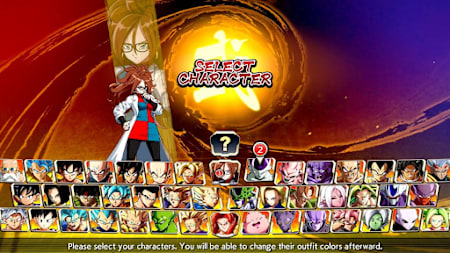
DBFZ comes through with roster depth
© Bandai Namco
It’s also important to recognize that character choice can change everything you know about what a game feels like. Games like Guilty Gear have immense changes between characters to the point where there’s basically no frame of reference when switching characters.
A big draw of the genre is proving which style is best, and often that comes down to character choice. Is Ky’s combination of screen control and plus frames better than Millia’s fast movement and mix?
Often, it has nothing to do with the tier list, and is solely based on style of play. A great way to get into games is by doing research and seeing what character will fit the way you like to play fighting games. If you like Frieza’s ability to zone with projectiles, then Morrigan might be a good fit in Marvel vs. Capcom, or Dhalsim in Street Fighter.
Or, you might pick entirely based on character aesthetic. Picking whoever pops out to you and taking the time to learn their gameplay is a very respectable route to go. Do cool warrior monk stuff with Jago in Killer Instinct, or fly around on dolphins with Guilty Gear’s May, whatever suits you.
EXECUTION
The appropriate level of execution in a fighting game is an aspect that’s been debated for literally decades, but the truth is it's an important decision to a lot of people. Some games' execution levels are so high that you’d have to grind for hours to get a bread and butter combo, but the beauty is that that appeals to some people, and it’s something a chunk of the player base has no problem putting up with.
Developers have heard these discussions though, and addressed it in multiple titles such as DNF Duel, and GranBlue Fantasy Versus (GBVS) and in less overt ways in Dragon Ball FighterZ and Guilty Gear Strive.
In GBVS, there is a button that will perform different specials when combined with different inputs such as down + special, forward/back+ special, etc. You could do the inputs with their original motion, such as a dragon punch reversal with 623H, but the special button makes it easier to get a newer player to intentionality while actually seeing their gameplan on screen. In order to not make this too overpowered, the special button version usually has more cooldown (not to be confused with recovery).
Developers continue to drop the difficulty level a tad on things like combo execution, but when done well, it does nothing to take away from the complexity of fighting games at any level.
Practice/Single Player/Netcode
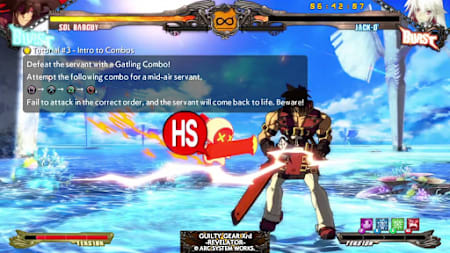
Guilty Gear has great practice options
© Arc System Works
A fighting game can have the most appealing gameplay of all time, but that doesn’t matter without the infrastructure needed to get players together, and keep them invested.
More than ever before, online netcode has become a hot topic. When more players and tournament organizers were taking things online, the ugliness of delay based netcode impacted some of the most popular games.
Thankfully, developers have gotten the green light since then, and most mainstream games either have rollback already, or are in the process of getting it.
It’s not just about playing online though, sometimes you’re only as good as your tools, which means you need a complete training mode to get the most out of your lab time. This is a part of the genre that is still hit or miss, so you want to make sure your training mode has all the moving parts that will make sure you can deal with fake setups, and hit your DP punish combos every time.
From a beginner’s standpoint though, possibly the most important part of this choice is the tutorial and accompanying teaching tools such as challenges and missions. Guilty Gear Xrd is an example of a great tutorial as well as missions. It uses an obstacle course to teach you the basics of movement and placing your attacks to hit targets around the screen as you move and the mission mode teaches you one or two practical counterplay options against every character in the game.
All of these play a part in choosing the right fighting game. At the end of the day, the FGC loves seeing new faces playing their games, so you’re bound to have a great time no matter what you choose.
