


Gaming

Gaming
How to master Legends of Runeterra
Take a look at our top tips on League of Legends' latest card game.
The wait for Legends of Runeterra’s second preview patch is over and a new wave of players can finally dive into the card-collecting action.
Currently, there are six major regions from League of Legends to choose from and 24 champion cards, giving you plenty of choices when it comes to crafting the perfect deck. Those that have played Hearthstone, Artifact and Gwent will feel right at home, however, there are a few notable differences that help separate Legends of Runeterra from the rest of the CCG crowd.
While past experience in other card games will likely help in your understanding of the game, you’ll still need to put in learn the core mechanics, card combos, synergies, and how to counter popular strategies if you wish to dominate your foes. Fortunately, we’ve put together a helpful Legends of Runeterra tips guide that will help increase your chances of getting that all-important victory.
1. Try out decks from each region

Try and get yourself familiar with all six regions
© Riot Games
There are currently six major regions present in Legends of Runeterra: Demacia, Noxus, Freljord, Piltover & Zaun, Ionia, and the Shadow Isles. Each region is home to its own unique champions and followers that players can choose to build their deck around, allowing for some pretty unique strategies and playstyles. Each deck is comprised of 40 cards and you can either focus on one playstyle that is tailored around a specific champion or choose to pair up with another ally to give your deck an extra boost. However, you must only choose from one of the six regions when building your deck, so make sure you take the time to read through each regions cards and understand the potential synergies that are on offer.
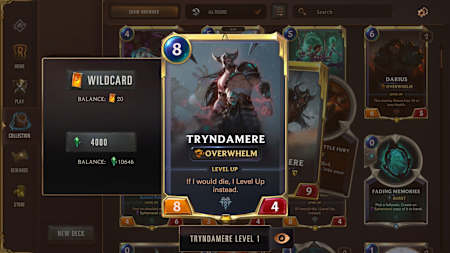
Just like most competitive card game, Legends of Runeterra has certain cards and decks that stand out due to their overall power and combo potential. For example, the Freljord’s Anivia and Tryndamere have a revive mechanic that allows them to return to the battlefield whenever they take lethal damage. This ability is incredibly strong when used in direct coordination with devastating board wipe cards like Avalanche, Ruination and She Who Wanders. These cards deal damage to every unit on the board and can quickly rid your enemy of their core units, leaving their hand in tatters and Nexus exposed. Anivia and Tryndamere will also take damage, but their revive ability will ensure you always have the damage needed to break the Nexus and take the game. Don’t be afraid to experiment with different card combinations and always be on the lookout for potential synergies that can give you the edge needed to beat your opponent.
2. Be prepared to put in the time

It's important to keep up with the current meta
© Riot Games
A little research goes a long way in Legends of Runeterra and just like any competitive game, Riot’s CCG rewards players that are willing to do their homework. Make sure you read up on the current meta decks and know what each champion, spell, ability, and card does before queuing up for any competitive matches. Of course, there’s nothing stopping you from simply learning these things as you play, but you’re less likely to be surprised by your opponent’s moves if you know what to expect. Websites like Mobalytics allow you to look at the most popular meta decks, formulate your own decks, look up cards, and even provide you with details on how to play specific archetypes, so make sure you check this site out regularly to keep up with current trends. If you put in the time into learning each decks strengths and weaknesses, your overall win rate will drastically improve.
3. Focus on levelling up your champion cards
Leveling up champion card will get you far
© Riot Games
Just like Riot’s ever-popular MOBA, Legends of Runeterra’s gameplay largely revolves around its beloved champion roster. There are currently 24 champion cards available in the beta and each one brings something different to the table. While these cards may be stronger than your standard units and follower cards, they do require a little extra care when using them, especially if you wish to unleash their empowered forms in later rounds. Every champion card has its own unique level-up requirement and some are much easier to meet than others. For example, Teemo requires players to plant 15+ Poison Puffcaps into their opponent’s hand, while Fiora must kill a total of two enemies. Once these objectives have been met your chosen champion will level-up and gain access to increased strength, defence and empowered abilities.
Fully levelled up champion cards aren’t just incredibly effective in battle, they can give you the edge you need to turn a close game in your favour – in fact, champions like Fiora can straight up win the game when they gain access to their levelled up form. However, before you go sending out your champion cards into battle, try to look for favourable opportunities where you can safely utilise their abilities without your foe deleting them from the battlefield. By levelling up your champion cards early on, you’ll have access to powerful units that can unleash devastating hits that can close out even the closest of games.
4. Keep an eye on your mana and use spell cards to your advantage

Calculate when and how to use your spell and mana cards
© Riot Games
Every card costs varying amounts of mana to play and you’ll need to think carefully before rushing units onto the board. It can be incredibly tempting to try and overwhelm your foe with low mana cost cards, but sometimes it’s best to save your mana for a spell card that can turn a fight in your favour. Unspent mana is stored at the end of the round and allows you to start saving for those big game-winning strategies, so don’t worry if you don’t have any cards in your hand to play. A total of three mana can be stored at a given time and will only be consumed once you cast any spells. Just like in League of Legends, spells can be used offensively or defensively, allowing you to dish out huge amounts of damage and even counter enemy attacks. For example, reactionary spells like Deny can stop a fast spell, slow spell, or skill dead in its tracks, while Radiant Strike bolsters a friendly unit’s strength and health.
While having high strength units will help you obliterate your foe’s Nexus, they won’t be able to unleash their devastating attacks if they get melted by enemy spells. As a result, having a deck that can utilise both reactionary and offensive spells is incredibly important, especially if you’re looking to protect your most precious cards and counter any decks that heavily rely on a handful of units. When playing or facing spell-heavy decks things can get a little hard to keep track of, so make sure you use Oracle’s Eye to view how each spell will impact the board. This will allow you to set up the perfect chain of events that will obliterate your opponent and secure you that all-important victory.
