




Gaming
Games
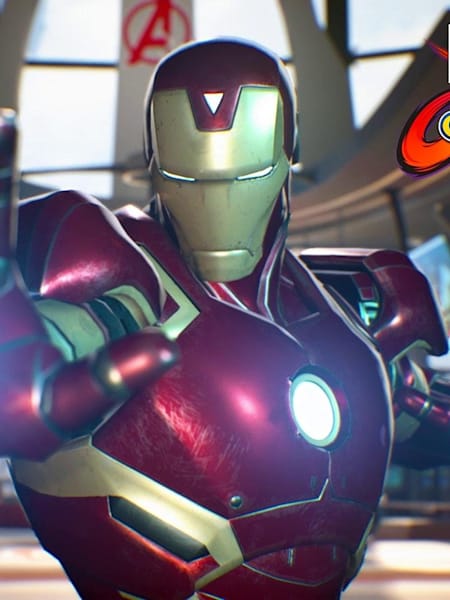
Our beginner tips for Marvel vs Capcom: Infinite
Struggling to clutch out those wins in Marvel vs Capcom: Infinite, or just trying to get that bit better? You can’t afford to miss out on these beginner tips.
It’s been just over six years since Marvel vs Capcom 3’s release and five since the highly lauded Ultimate Marvel vs Capcom 3 update. As a love letter to both comics and the Marvel universe, the Marvel vs Capcom series was in need of a new instalment on the current generation of consoles. Well, now we’ve finally got one in the shape of Marvel vs Capcom: Infinite, out tomorrow on PS4, Xbox One and PC.
In fact, it’s been so long since we all played a Marvel vs Capcom game that the rust's definitely starting to show. Muscle memory isn’t what it used to be and, with the change in mechanics the new MvC brings with it, we thought it was best to give you a beginner’s guide to ensure that you hit the ground running. Here are our Marvel vs Capcom: Infinite tips to get you started.

Missing img placeholder
© Red Bull
Find a team that suits you
With MvC:I anything is possible, there are (almost) infinite possibilities that help you slot two of your favourite characters in a team. So, first point of call is to play about with the cast and find the ones you like. Head off to your preferred mode to muck about and put the cast through the wringer until you find whoever resonates with you most. For instance, the story mode matches the likes of X and Captain America together, as well as Chun Li and Captain Marvel. You might want to create a theme for your team, like sticking to robots (Ultron and Zero), or playing as the Darkstalkers characters (Morrigan and Jedah).

Rocket Raccoon finds himself an infinity stone
© Capcom
Have you got the stones?
After you’ve decided on a team that works together, the next step is to find the Infinity Stone that either covers your character’s weaknesses, like giving Captain America a wall bounce with the power stone, or highlights its strength. MvC:I has revitalised the Infinity Stone mechanic, bringing the fabled gems to the forefront of the series again. Each stone has its own unique ability, assigned to its own button on your controller, called the Infinity Surge. Infinity Surges allow your character to grab your opponent with a command grab, bounce opponents off the wall, teleport, steal health, create a mini vortex, or map a homing projectile to your moveset at the touch of a button. It’s important to understand the purpose of each of these stones as it might prove vital in some match-ups, and noting which stone your opponent picks will give you a big hint towards how they might play.

Thanos activates the reality stone
© Capcom
There’s a storm coming
The Infinity Gems possess more than just the surge ability; they also have an all-out attack called the Infinity Storm. Access to the Infinity Storm is earned through the use of your Infinity Surge and by taking damage. When the gauge reaches 50 percent you’ll be able to activate it. Every Infinity Storm is an excitingly powerful version of the Infinity Surge, so there are occasions that you might pick a stone for its storm rather than its surge. Iron Man, for example, greatly benefits from the Reality Stone even though he already has a whole load of projectiles at his disposal.
Each stone will offer a unique series of abilities when in the storm; some will let you cancel your moves faster than before, while others will confine your opponent to a tiny box on the screen. It’s even possible to revive your fallen team-mate with the Soul Stone. There’s also the added bonus that any Infinity Storm can be cut short by pressing your Infinity Surge and Tag buttons simultaneously to perform a level-three super attack for free.
Understand the basic combo system
If you’re an absolute beginner, it’s a must that you get a feel for the combo system. Thankfully, Marvel vs Capcom: Infinite has implemented just the mechanic for you, autocombos. By repeatedly pressing the light punch button in quick succession you’ll perform a full combo. This is a good way to familiarise yourself with your moveset and understand the basics of a combo in Marvel. All autocombos will start with a series of ground attacks before launching the opponent into the air for another series of attacks. This shows that every character has a ‘launcher’ attack and a spike (a move that knocks an enemy out of the air and to the ground) in the air. Although there are no exceptions to these rules, some characters, like Nova, will also have their own unique launcher. So, be sure to look at your character’s move list and check out their unique moves.

Spider-Man puts his abilities to the test
© Capcom
A mutant on a mission
If the combo system isn’t quite clicking, then your best bet is to venture into Marvel vs Capcom: Infinite’s mission mode. Here you’ll find a brief series of tutorials that teach you the basics of the game, including a quick intro to those stones we talked about earlier, and a series of 10 combos/challenges for every character. These combos are far from optimised, but they give great examples of how some attacks interact and expand on the basic autocombo system. There are even videos of how the combos might look, something that comes in extra handy when completing Strider’s missions. Mission mode is definitely worth spending some time in; you might even notice that some of the heroes are using the stones you matched them with and some tag combos you wanted to try out, like Spider-Man and Frank West.
Dig a little deeper
When you've finally started to understand your basic combo structure and tried out a few missions, you’ll notice that every character has their own unique special attacks. Some of these moves can bounce opponents off the wall, slam them off the ground, or even freeze them on the spot. Any combination of these attacks can be implemented into your combo to extend its length and increase its damage – how you implement them is up to you.

Gamora lines up her shot
© Capcom
Learn to block and push block
It seems simple to say, but in practice blocking is extremely hard. With the pace of the Marvel vs Capcom: Infinite as it is, you might find it hard to really block things at first and the only way you can get better is through practice. There are some obvious tips, however, the most vital being learning to Advancing Guard. Advancing Guard is pivotal in changing the momentum of a fight. By pressing two buttons while you’re in block stun successfully, your opponent will be pushed a considerable distance back. There are also other bonuses to push blocking, like the ability to reflect Ryu and Morrigan’s fireballs back at them. By reflecting the projectiles, you’ll turn your defence into offence, so be sure to look out for the projectiles you can reflect.
Master the art of tag
Like every Versus game, tagging is critical in Marvel vs Capcom: Infinite. It might actually be more important now than ever. Previously, tagging came with a strict set of rules and at the cost of meter, or required specific set-ups to combo effectively. That’s no longer the case in Marvel vs Capcom: Infinite. In MvC:I you can tag whenever and wherever with the press of the tag button. As long as your character is alive and they haven’t recently tagged in (there is a cooldown on character’s tagging in and out), you can cancel any attack and bring in your BFF for an added mix-up or extra damage in the middle of the combo. One thing to be mindful of is that both characters can be hit during the tag animation and this can result in you taking a large chunk of damage, so be careful.

Jedah shakes his fist in anger
© Capcom
Hit up training mode
It might not be the most exciting aspect of getting better at a fighting game, but MvC:I’s training mode is the perfect place to test out your combo damage in a safe environment. You’ll be able to see the exact damage your combos do and ensure that they work on all the members of the cast (there’s nothing worse than Rocket Racoon falling out of your combo because he’s too small). It’s even possible to set up specific scenarios in training mode, like full meter and full Infinity gauge to test out your flashiest combos. There’s even room for a friend to join you and set up scenarios that you wouldn’t be able to practise without their help.
Meter and health management
As with any game, meter and health management is incredibly important. Obviously if you run out of health you lose the match, but meter is just as important. By taking stock of how many meters you have, you’ll always be able to use a team super to get somebody off your back, or use it to add that last bit of damage from a super move to kill your opponent.
More important than recognising your current meter situation is acknowledging your health values. In Marvel vs Capcom: Infinite there is recoverable health. As you start to take damage, you’ll notice there is a residual red bar left behind. This bar represents your recoverable health. By tagging out your partner you will slowly recover this health and prolong the fight just that bit longer. This red health can also be removed from you if you're grabbed, so when you have a lot of recoverable health you should definitely keep an eye out for those sneaky players who will try and rush in for a grab. It’s also super-important that you recognise that it's possible to tag out a character in the middle of a combo at the cost of two bars by holding the tag button, something that the tutorials and missions don’t quite cover.

Dante fights off an attacker
© Capcom
Play with friends
You were probably going to do this anyway, but at the centre of any game you’ll find a load of players wanting to have fun. That’s probably the most important part about MvC:I, finding teams you have fun with and playing them with people at your level. Over time you, and whoever you choose to play with, will get better and better. In fact, your friends might even be able to help you understand your losses more than anyone else, pointing out how they got past your defence, or where they noticed a gap in your offence. So, grab your friends, pick up your pad/stick, and show them how lethal your Jedah and Ultron team is.
Fighting games are never easy; they take a lot of time and patience to improve in, but with enough dedication and practice anyone can rise up the ranks. So, hopefully these tips and tricks to get you started have set you on the path to greatness.
