

Wintersports
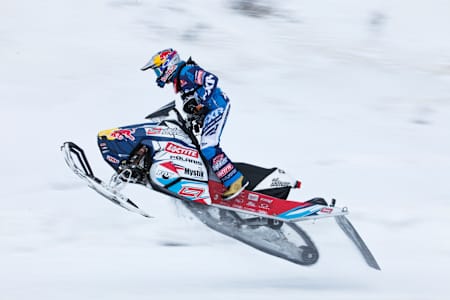
Snowmobile
Beginner’s guide to snowmobiling: Tips and must-know basics
Discover the types of snowmobiles, the best snowmobiling gear, and everything else to know for unforgettable adventures from day one.
The 1960s were a game-changing moment in the history of snowmobiling. In 1962, the first documented snowmobile race took place in Canada — and since then, daredevils like Levi LaVallee have used the snowmobile, also known as a “ski-doo” or snow machine, to leap a defying, and defining, 412 feet on icy trails. LaVallee says that snowmobile racing comes with its challenges but is infinitely rewarding.

Levi LaVallee at the Winter X Games 2014
© Garth Milan/Red Bull Content Pool
“It’s so difficult to not give up when everything in your body and mind is telling you to,” LaVallee said, “but once you cross the finish line, that feeling is like no other — it’s the best feeling in the world.”
Those looking to enter this fast-paced world can get started with the below facts and snowmobile riding tips.
01
Choosing the right snowmobile
The thrill of snowmobiling starts with choosing the right vehicle for the task. The available types of snowmobiles for recreation include:
- Trail snowmobiles. This type of snow vehicle has a short track and large intercooler for temperature control on hard groomed trails. As their name suggests, they’re designed for staying on the trail. They’re also extra comfy, with large plush seats, lower handlebars, narrow skis, and a wide stance.
- Mountain snowmobiles. Designed for travel anywhere on the mountain, these models have high handlebars fitted with grab straps. This design allows for maneuvering the snow machine while standing, as does these snowmobiles’ light weight, wider skis, narrow stance, and especially long tracks.
- Touring snowmobiles. These are for lengthier adventures. Their signature features are long tracks and a relaxed riding position, and some luxury models include heated grips and seats, storage space, and adjustable backrests. Some have two seats for traveling with company.
Choosing a trail snowmobile makes sense when sticking to groomed runs, whereas mountain snowmobiles offer superior performance at high altitudes and in fresh snow. Touring models, by contrast, perform poorly in fresh snow but are great elsewhere, especially for long runs.
02
Essential snowmobiling gear and equipment

Levi LaVallee
© Dan Mathieu/Red Bull Content Pool
It’s cold out there. Seasoned snowmobilers know to always bring the following gear on their adventures:
- Goggles. Harsh, cold winds and blowing snow and debris are part and parcel of snowmobiling. So too is bright-white snow that powerfully and brightly reflects sunlight. Googles offer protection and visibility while adding anti-fog technology into the mix.
- Gloves. The best snowmobiling gloves offer lots of dexterity and grip. They’re also durable and weatherproof enough to withstand the harsh conditions of snowmobiling. Perhaps most importantly, they’re super warm and comfy.
- Boots. Great snowmobiling boots have a warmth rating that signifies the lowest temperature at which they provide warmth. Lots of insulation near the ankle and between the boot’s sole and the snow is important too. Waterproof boots are best given all the snow, and removable liners for air-drying overnight are ideal.
- A helmet. Adventure sports like snowmobiling are high risk by default, so a helmet is an obvious must-have. For the best protection, choose a helmet with MIPS (Multi-directional Impact Protection System) technology that reduces force upon impact.
- Outerwear. When it comes to protective, warm, waterproof outerwear, many snowmobilers swear by mono suits. These are full-body suits that offer waterproofing, breathability, and durability from head to toe. Many snowmobilers also don snow bibs that come high up enough on the torso to offer extra protection against snow and cold air.
- The right inner layer. Materials that keep body heat in while allowing moisture and sweat to wick out are ideal. Synthetic materials are typically most effective at achieving this balance.
Additionally, snowmobilers venturing off-trail may want GPS navigation so they don’t get lost, and heated handlebars can make a big difference when touring. For other snowmobilers, this equipment is just nice to have instead of necessary.
03
Understanding snowmobiling etiquette and trail rules

Levi LaVallee
© Garth Milan/Red Bull Content Pool
Snowmobilers are rarely, if ever, alone on the trail. Respecting and cooperating with other adventurers involves sticking to the following snowmobiling etiquette and trail rules.
- Staying to the right. As with driving, snowmobiling involves navigating two-way lanes. Keeping to the right minimizes the chance of a collision, as does continuing to look forward and paying attention to changes in a trail’s width.
- Accounting for stopping distance. Respectful, safe snowmobilers come to a stop within an area they can see instead of waiting to turn a corner or get over a hill.
- Letting wildlife be. Snowmobiling happens in nature where wildlife roams freely — and the land is theirs first. Respectful, safe snowmobiling means leaving animals alone and absolutely never driving toward or otherwise disturbing them.
- Following the speed limit. Some snowmobiling trails list speed limits, in which case adhering to them is an important snowmobile tip.
- Staying on snowmobile paths. Often, snowmobilers encounter areas where snowmobiling is barred. When this happens, respectful snowmobilers avoid these areas instead of venturing into them anyway.
04
Learning to ride: basic snowmobiling techniques
Turning on a snowmobile is step one before hitting the trail. To do this, snowmobilers point their vehicle in a safe direction, turn the parking brake on, and check that the throttle isn’t frozen. Then, they turn the key to turn the engine on, choking or priming the engine as well if it’s cold, and turn the parking brake off.
Snowmobilers often point their head and eyes where they want to go as a form of steering. If any issues arise, snowmobile brakes are typically within quick reach of the left hand. Breaking earlier than later is always best.
Beyond steering and breaking, there’s handling slopes. For example, when hills are on the right, leaning in that direction can counter the snow vehicle’s natural tendency to lean downward and left. This principle applies to any upward or downward slope in any direction.
New snowmobilers typically take things slowly as they master these techniques. They might also stick to groomed trails at first. Other terrain, including deep snow, is best saved for when full expertise is achieved. Plus, switching from a trail snowmobile to a mountain model is best for these areas.
05
Top beginner-friendly snowmobiling destinations
Lots of the best snowmobiling destinations are in the Nordic countries. Tromso in Norway is known for powdered trails flanked by gorgeous mountains and fjords, and Rovaniemi in Finland is home to untouched mountain areas great for touring. Both destinations give those lucky enough to get there the chance to see the Northern Lights.
In North America, Montreal is known for great snowmobiling. The terrain is varied enough to accommodate new and experienced snowmobilers alike, and frozen lakes and swaths of stunning hills are common sights. Small group tours are available in Montreal and in the Nordic locations for more memorable guided experiences.
06
Snowmobile maintenance basics
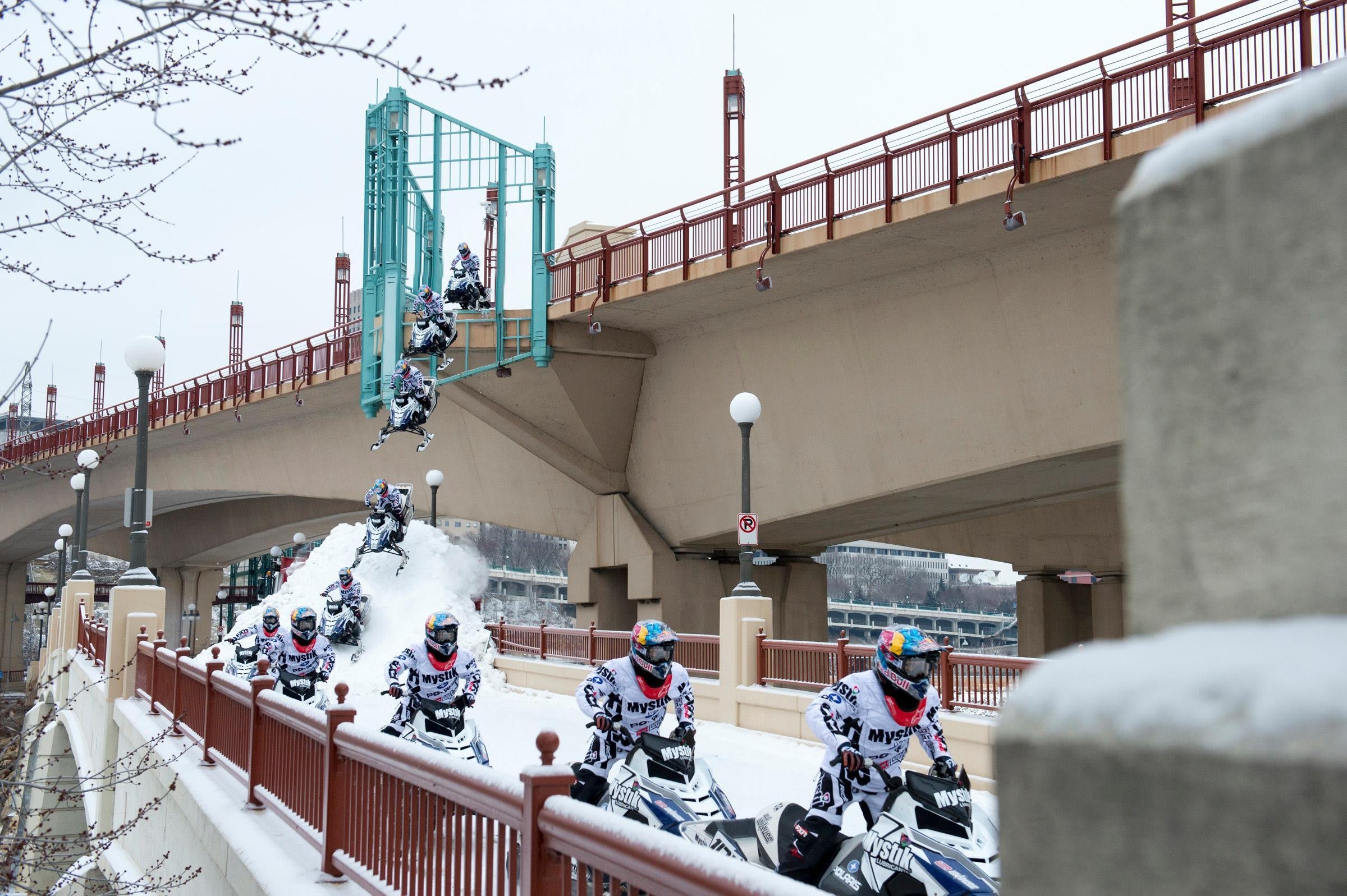
Far scarier than it looks
© Ryan Taylor/Red Bull Content Pool
All snowmobilers are best off checking their ski-doos in the following areas before setting out for the trail. This way, they stay safe on their trail, and their ski machines perform well.
- Suspension protection. If the lateral wear line on the Teflon bands surrounding the suspension can’t be seen, these bands should be replaced sooner than later.
- Wheel function. If flattened portions are visible when a wheel is spinning but the snowmobile is stationary, new wheels may be necessary. Loose seals or delaminated parts also suggest that it’s time for a replacement.
- Track condition. There should be no perforations, tears, hooks, or missing profiles in a snowmobile’s tracks. A tension gauge should show, when the snowmobile is lifted from the back, that the track’s deflection is within the acceptable range from the owner’s manual.
At times of year when snowmobiling isn’t happening as often, the snow machine’s battery should be stored in a cool, dry place outside the snowmobile. Additionally, at regular intervals during snowmobiling season, fuel pump testing is encouraged. This check requires special equipment such as a vacuum gauge, but with this equipment in hand, it’s otherwise straightforward.
Get ready for your snowmobiling adventure
Professional snowmobilers such as Nick Lorenz were once beginners on the ski-doo, and now, they’re masters. Novice snowmobilers can follow this arc too if they follow this guide’s tips and keep at it. Better yet, with enough practice comes the possibility of snowmobiling as part of a three-sport day that includes snowmobiling, just like Levi LaVallee’s dream day in April 2024. Or, for the especially ambitious, incredible snowmobile video stunts may be within reach. With snowmobiling, the possibilities are limitless.

5 min
Levi Lavallee Urban Snowmobile in Saint Paul
Levi Lavallee Urban Snowmobile in Saint Paul
