13 reasons why Mike Horn is the world’s ultimate adventurer
Mike Horn has just completed his latest epic adventure across the Arctic Circle. Get the lowdown on his achievement and learn how he became the top adventurer he is today right here.
By Will Gray
8 min readPublished on
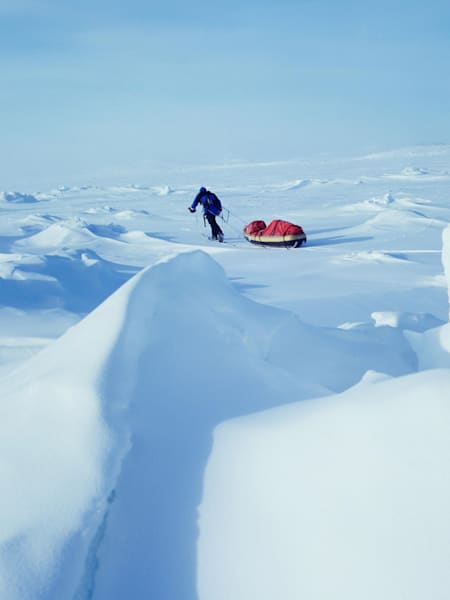
Mike Horn has just affirmed his place as the world’s top adventurer once again after completing an epic trek across the Arctic Circle.
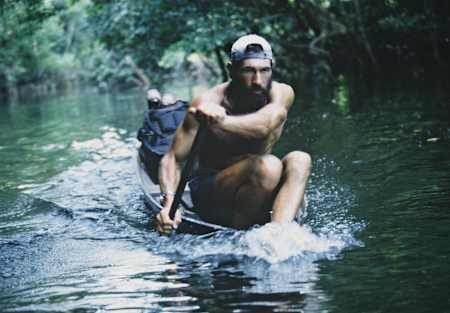
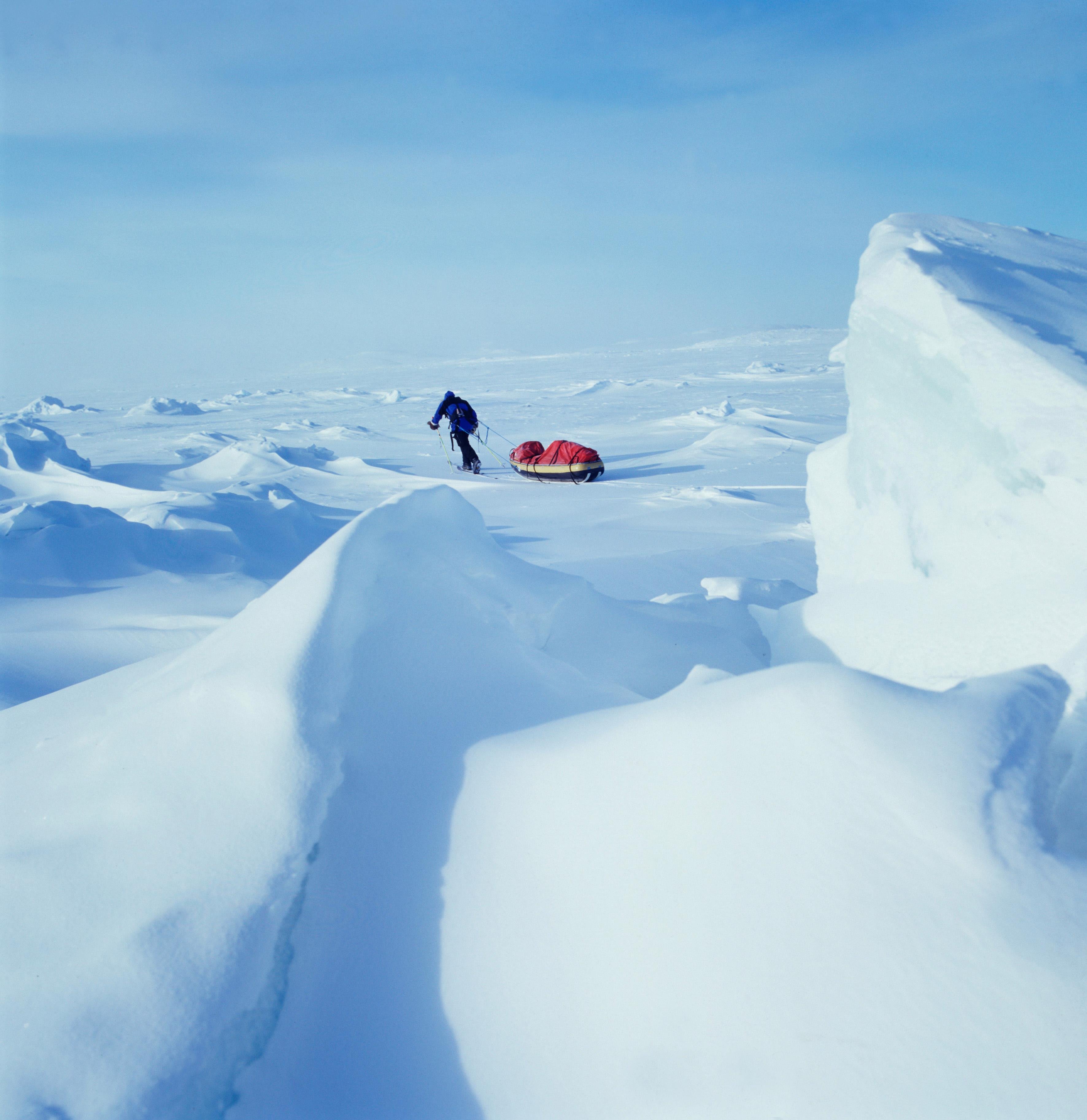
The South African explorer covered around 1,800km in just a few months alongside Børge Ousland of Norway despite running dangerously on supplies, and it's just the latest in a long line of stunning achievements Horn has recorded since he traversed the Amazon River on a hydrospeed board back in 1997.
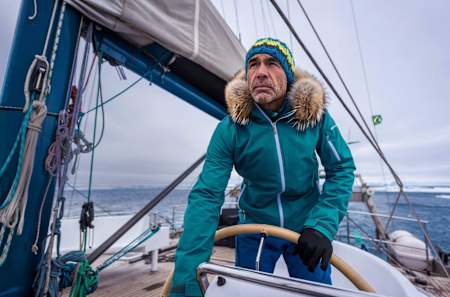
Horn has been pushing the boundaries of exploration for more than 20 years now. He’s circled the world twice (once on the Equator and once on the Arctic Circle); he’s walked to the North Pole in the dark and cold winter; he’s sailed around the planet for four years on his boat; and he’s scaled four of the world’s 8,000+m mountains.
This year's 1,800km trek across the frozen Arctic Ocean with Ousland was completed just in the nick of time, and it comes off the back of Horn crossing Antarctica alone and unsupported in 2017.
According to his website, he's “in a constant state of travel and adventure” – but it’s not about what he’s done, it’s about how he does it, so continue reading to learn about the things that make him the world's ultimate adventurer.
1. He knows the importance of planning
Preparation is one of the most important parts of an expedition for Horn – and in his most recent adventure he and Ousland wouldn't have completed their journey were it not for clever planning.
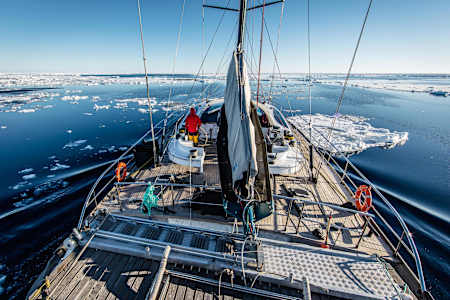
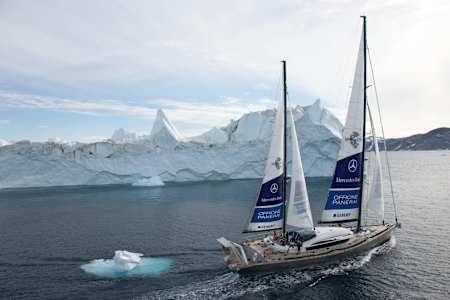
By starting at the end of the summer, they were able to sail as far as they could before being dropped off to start their walk. That kept the distance they had to travel on foot to a minimum.
Even then, plans to finish by mid-November were hit by higher temperatures that meant the ice was thinner and moving faster than expected and they were met by a rescue party with a few days of food remaining. It’s that level of consideration and determination that's stood out throughout Horn’s lifelong adventure.
2. He built his appetite for adventure at an early age
When he was eight years old, Horn made a determined effort to ride his bike 300km to visit his cousin – but was stopped by his father before he got too far. “I was curious to how many days it would take,” he said.
In 1997 Mike descended 4,350 miles of the Amazon on a hydrospeed board
Inspired by his father’s success as a rugby player, he showed a similar talent for sports, but because his country was banned from the Olympic Games, he realised he couldn’t reach the top so chose adventure instead.
3. He quickly learned how to value money
Horn got a job working for his uncle's food import/export business and took advantage of the cold winter frost that destroyed the South Africa's cabbages to make a fortune.
He bought stock from farmers a high price then kept it in a massive cooler until the frost arrived. Then he sold it to supermarkets on the promise they’d keep buying from him, even when the weather thawed.
“Maybe too quickly, I earned a lot of money,” he told Straits Times. But at the age of 28, he held a party to give away his house, car and belongings, and kept just enough money to fly to Europe and begin a life of adventure.
4. He became an explorer by accident
Having been fascinated by stories of Ernest Shackleton, Roald Amundsen and Jacques Cousteau, he'd always been keen on adventure – but it was an accident that actually triggered him to become an explorer.
As soon as he arrived in Europe, he taught himself to ski so he could earn money as an instructor, did the same with river rafting, then got signed up for a marketing campaign and started taking part in big overseas adventures.
While paragliding around Machu Pichu, he crashed and ended up in hospital for a month. “That’s when I made the most important decision of my life: to become an explorer,” he said.
5. He’s been trained by the Special Forces
Horn did two years of military service among Angola’s guerrilla warfare with South Africa’s special forces. “It made me understand life is not a game,” he told Sidetracked. “I knew I had to go with the aim of surviving.”
Then, before his first major expedition on the Amazon, he joined Brazil’s special forces in Manaus to learn to survive in the jungle – which he did, despite being bitten by a snake and "stumbling blind for five days."
6. He’s good with all modes of transport
Horn spent 18 months circling the equator using just human power – sailing three oceans, pedalling, paddling and hiking through Brazil and Ecuador, and hiking through Borneo, Sumatra and the whole of Africa.
He then spent over two years travelling 20,000km around the Arctic Circle using boat, kayak, ski kite and his own two feet, travelling above the tree line and against the prevailing winds and currents to make it more difficult.
4 min
Mike Horn’s Pole2Pole expedition
Watch a video about Mike Horn’s Pole2Pole expedition
But one of his adventures has also involved some tough overland driving – taking a 4x4 car through 10 countries from Switzerland to Pakistan, with the aim of summiting K2 at the finish.
7. He won’t let go
When Horn took on his first adventure with another explorer in 2006 – a world-first trek to the North Pole in the dark Arctic winter with Ousland – he saved his expedition partner’s life.
He's also the first to complete a solo North-to-South trek of Antarctica
During the trek, Horn navigated in the dark by keeping the wind on his face at the same angle at all times, and at one point the pair had to crawl over thin ice for eight hours for fear of it cracking.
When Ousland fell into freezing water, Horn had to pull him out despite the pair agreeing not to risk their lives for each other. “He was pulling me in,” he said. “It became this tug of war to live.”
8. He goes to extreme lengths to survive
Ahead of that Arctic expedition with Ousland, Horn spent time in a wind tunnel in Germany, practising how to pitch a tent in winds of 150 kph. “In the end I could pitch a tent with my teeth and feet,” he said.
He also drank two pints of olive oil every morning to get his body used to the 12,000 daily calories it needed to keep working in the extreme cold. On the expedition itself, he ate 100g of pure butter a day for quick calories.
And to prevent himself from freezing, he drank water to make sure he woke up every two hours. Each time, he urinated into a flask and used it like a hot water bottle to warm up his -39ºC sleeping bag to 5ºC.
9. He’s innovative with his equipment
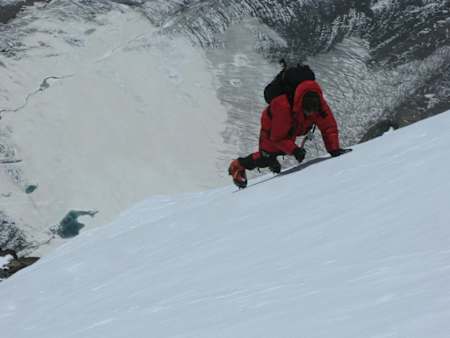
When abseiling down after reaching the summit of 8,047m high Broad Peak in the Himalayas with Swiss alpinist Köbi Reichen, he ran out of pitons – so he pulled off his watch and wedged it into a crack.
It was a big risk, but he put a rope around the watch used it as an anchor to carry his body weight and help him abseil back down. The watch is still there on the mountain, apparently.
10. He knows when to say enough is enough
Horn attempted to achieve a childhood dream in 2014 by summiting K2 on the China–Pakistan border – but he chose to stop just 200m from the summit when his party was hit by bad weather.
Others around him continued on towards the summit, only to trigger an avalanche. The ones that went on didn’t make it back down, but Horn will one day get the chance to try again.
11. He knows how to play to the cameras
Horn speaks seven different languages and has used his fluent French to break into TV, appearing on three series of The Island: Seuls au Monde showing participants how to survive on a tropical island for a month.
When Mike Horn ran out of pitons he used his watch to wedge it into a crack
Since 2016, he’s hosted the French version of Running Wild with Bear Grylls and his own subsequent version, Cap Horn, taking French stars on adventures in Namibia, Sri Lanka, Botswana, Venezuela and Nepal.
12. He tricked his body into crossing Antarctica
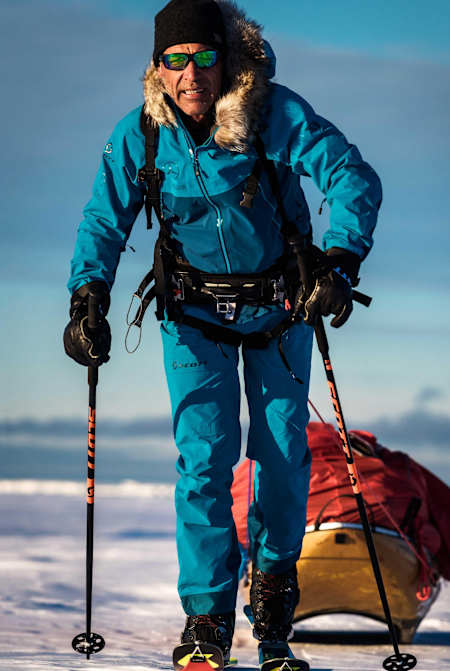
During his solo Antarctic crossing in 2017, he used the non-stop sunlight to trick his body into thinking a day lasted for 30 hours rather than 24 so he could sleep for five hours, eat for five hours and walk for 20 hours.
All of Horn’s expeditions keep sustainability and conservation in mind
He'd predicted it would take 110 days to complete the 5,100km trek but instead he did it in 56 days and 22 hours. “Every fourth day, I gained a day,” he told Mr Porter magazine afterwards.
13. He’s the ultimate motivator
“If your dreams don’t scare you, they’re not big enough.” That’s the motivational mantra passed down from his father and it’s not only helped him on his expeditions.
His motivational sessions helped India win the 2011 Cricket World Cup, contributed to South Africa’s surprise test victory over England in 2012 and turned a flaky German football squad into World Cup winners in 2014.
He once told AskMen: “I never wish for an easy life with fewer obstacles. I always wished I were better, to be able to overcome challenges. 80 percent of what I do happens in the head, 15 percent is physical and 5 percent is luck.”