
Soccer (Football)
Red Bull Bragantino have got the Copa Sudamericana shook – here's why
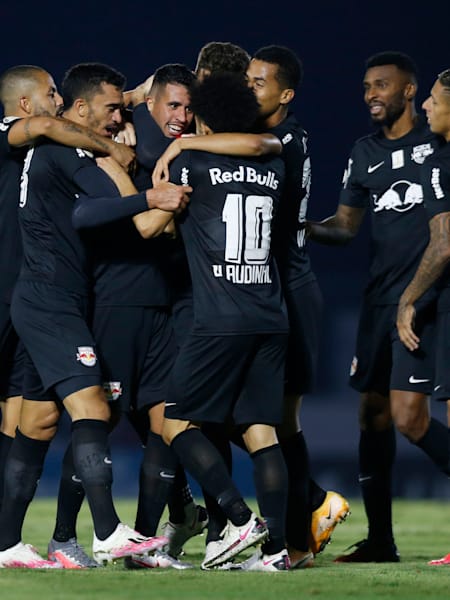
Brazilian football team Red Bull Bragantino are bidding to make history by winning the Copa Sudamericana trophy. Not familiar with them? We've got all you need to know right here.
Standing out from the crowd isn't easy in a football-mad state in a football-mad country, but by reaching the final of the Copa Sudamericana the excitement levels around Red Bull Bragantino are steadily rising.
Manager Mauricio Barbieri is assembling a young, hungry and fearless squad of talent from all over South America and the club that were in the third division only three years ago are now taking the fight to the iconic big boys of São Paulo and beyond.
And they're doing it in style. They run hard, press in numbers and attack with maximum energy, an approach that's resulted in them finding the back of the net in each of their last 10 games.
Here are eight facts on the club who will bid to make history and lift the Copa Sudamericana trophy on November 20 in Montevideo, Uruguay.
Want more Brazil-inspired football content?



1. They're based in the football hotbed of São Paulo
Red Bull Bragantino, or ‘Braga’ as they are known by supporters, are based in the town of Bragança Paulista, around 90 kilometres from São Paulo. Despite spending much of their history in the lower division they've always enjoyed a passionate and devout following at the Estádio Nabi Abi Chedid.
The club’s golden period came in the early 1990s when they won the Paulista championship in 1990 – usually the preserve of the big city clubs such as São Paulo, Santos, Palmeiras and Corinthians – and finished runners-up in the 1991 Brazilian championship.
After suffering relegation in 1998, they finally returned to the top-flight of the Brazilian championship last season and exceeded expectations by finishing in 10th place and qualifying for the Copa Sudamericana.
2. They have a meticulous coach
Mauricio Barbieri never played professionally, but is one of Brazil’s most studious coaches. The 40-year-old has a degree in physical education and has been influenced by names such as Brazil’s 1982 World Cup coach Telê Santana, as well as Luiz Felipe Scolari and José Mourinho.
He took over Red Bull Bragantino in September 2020 and has guided the club to their best-ever result in a South American competition since they reached the quarter-finals of the 1996 Conmebol Cup.
Adaptability is a key part of his coaching and his team certainly adapted quickly to the demands of a new competition. He explained: "At first, we saw the Copa Sudamericana as a great learning experience. After all, we hadn't played a tournament at this level for 25 years.
“We were up against big teams, with different styles, but as the games have gone by we've gained maturity. Now we've become equally competitive home and away."
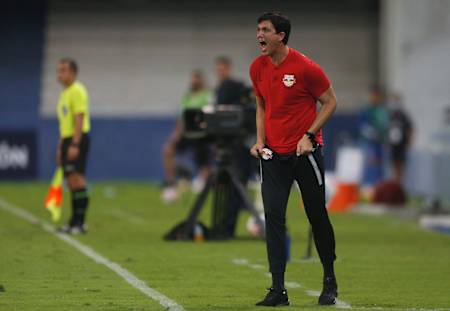
Coach Maurício Barbieri never played professional football
© Ari Ferreira / Red Bull Bragantino
3. Artur is a player you need to know
Artur, who was recently called-up to the Brazilian national team, is a left-footed winger, who usually plays on the right-hand side of the attack. He can be exhilarating to watch and is never happier than when running at defenders down the right, then cutting inside and shooting with his left foot.
The 23-year-old has been ever-present in the Copa Sudamericana campaign, even scoring a memorable goal from the halfway line which gave them a 1-0 win over Talleres in the quarter-final second leg.
He's the team’s leading scorer and added to his tally with the all-important third goal in the 3-1 second-leg victory over Libertad in the semi-final.
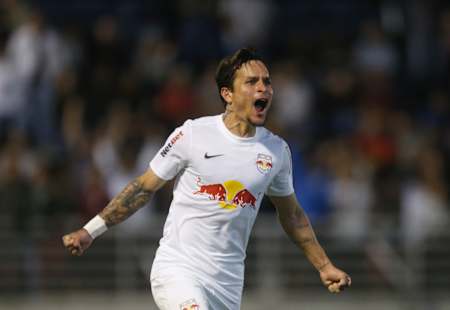
Artur's performances earned him a place on the Brazil national team
© Ari Ferreira / Red Bull Bragantino
4. They play a high-energy, high tempo style
Throughout their campaign, Red Bull Bragantino have remained faithful to a high-tempo, attacking style. They look to build patiently from the back and then get the ball to Artur in a position where he can run at the opposing defence. Counter-pressing is a key aspect of their style and, when they lose the ball in attack, they immediately look to win it back by forcing the opposition into mistakes.
5. Youth meets experience
The average age of the team that faced Libertad was just 25, with four players 21 or under. The squad is a mix of hungry prospects and experienced campaigners, with the likes of full backs Aderlan and Edimar alongside striker Ytalo, who are all well-travelled and in their 30s, tasked with leading the way.
Nineteen-year-old midfielder Bruno Praxedes has quickly settled into the side following his move from Internacional in June, while young Argentine striker Tomás Cuello has also impressed.
Goalkeeper Cleiton enthused after the Libertad win: "We are reaping the fruits of the work we started in 2020,” while two-goal hero Cuello added “the humility of this group is incredible”.
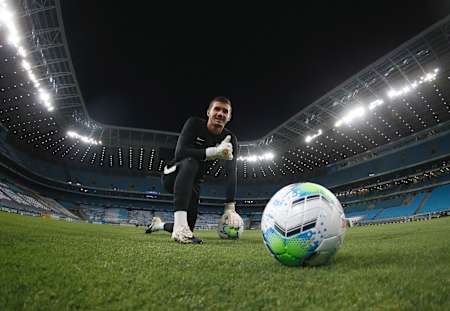
Red Bull Bragantino's goalkeeper Cleiton
© Ari Ferreira/Red Bull Bragantino
6. The women’s team are also on the rise
In only the second season since they were founded, the Red Bull Bragantino women's team won the Brazilian championship second division -- Serie A2 -- and were promoted to the top-flight for the next season. The two-legged final against Atlético Mineiro ended 0-0 on aggregate, but they clinched the title 4-2 on penalties.
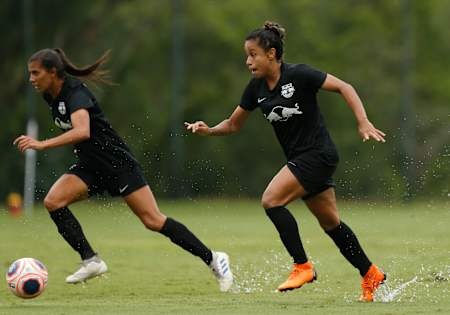
Red Bull Bragantino's women's team are proving a force to be reckoned with
© Ari Ferreira/Red Bull Bragantino
7. Their hometown has a history with sausages
Yes, you read that right. Bragança Paulista, the club´s hometown, is famous in Brazil for its sausages, so much so that it's known as Brazil's National Sausage Capital.
The story goes that in the early 20th century, a lady named Dona Palmira sold sausages from her modest abode in the centre of town. At the time, the town was home to many travelling salesman who began taking the sausages on their travels to other parts of the state and São Paulo itself.
Before long, the town's name was inextricably linked with sausages. Nowadays, it is home to several sausage producers and stages an annual sausage festival, attracting up to 30,000 people. The Restaurante Rosário, located in front of the stadium, is one of the best known in the town, especially for its sausage sandwiches.
8. They played a part in Brazil’s 1994 World Cup victory
Bragantino inadvertently acted as the launch pad for Carlos Alberto Parreira to lead Brazil's triumphant 1994 World Cup campaign. Parreira had returned from a spell in the Middle East while Bragantino, having upset the status quo by winning the Paulista championship in 1990, had suddenly found themselves without a coach after Vanderlei Luxemburgo resigned.
Parreira, keen to coach a team with potential, accepted an offer and six months later he led Bragantino to the final of the 1991 Brazilian championship, where they were beaten by Telê Santana´s memorable São Paulo side.
Brazil came calling shortly afterwards and, after a turbulent qualifying campaign, he led Brazil to the title in 1994 with a penalty shootout win over Italy.