
esports
SHORYUKEN!
Thirty years ago, the first entry in Capcom's revolutionary fighting-game franchise hit arcades. The world of gamerdom has never been the same. An oral history of "Street Fighter."
"Street Fighter" arrived in arcades in 1987. Almost en masse, acne scarred teens converted their entire monthly allowance into quarters to do battle. It wasn’t the first fighting game that let players challenge each other, but it created the paradigm for a genre. The game offered complicated motions—shooting a fireball, or the now iconic "Shoryuken!" (Japanese for “rising dragon punch”), a battle cry that has trickled into popular culture as ringtones and tattoos.
It pioneered an unprecedentedly deep and nuanced form of play, and the epic head-to-head combat was so involving it helped birth what we now know as the competitive eSports tournament scene. And, of course, it was the first time players met characters like Ryu, or the shaggy-haired, golden-locked Ken, who have been around longer than some of the competitive gamers now playing them in global tournaments. The game’s first iteration looked better than it played but showed promise— upon which Capcom has capitalized ever since, beginning with the quantum leap that was "Street Fighter II" in 1991
As the top players gather in Boston on November 18 and 19 to decide the North American champion at Red Bull Battle Grounds, we look back on the game that shaped.
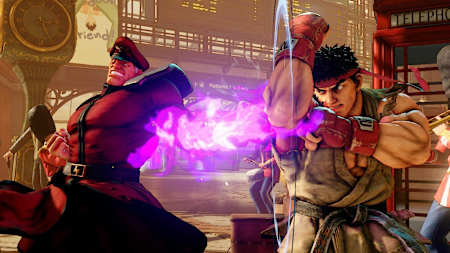
Ball of fire
© CAPCOM
The Moves
The original "Street Fighter" blazed trails with hidden special moves, but the sequel introduced distinctive characters with unique abilities that allowed every player to create their own personal style.
Greg Kasavin, former editor-in-chief of "GameSpot"; creative director on the games "Bastion", "Transistor" and "Pyre":
Just the idea of choosing your character in "Street Fighter II", much less being able to choose a character that looked like Blanka, was mind-boggling at that time. That the game had eight completely different playable characters was certainly its most striking aspect. (It’s kind of amazing to me that the iconic characters from that game have now been around for much longer than most "Street Fighter" players have been alive!) The concept of combos—stringing together moves to make an unblockable and highly damaging attack sequence—added a sense of discovery and performative flair. There seemed to be no ceiling to how skillful you could be at the game. Every character match-up was unique, and you could spend months just trying to master the nuance of a single character’s move set.
It set the soundscape for every 7-Eleven convenience store for the next several years.
Adam Heart, competitive player; lead combat designer on "Killer Instinct" Season 2 and Season 3:
I first encountered "Street Fighter II" at a skating rink during a middle-school class gathering. It was the best-playing game I’d ever touched.
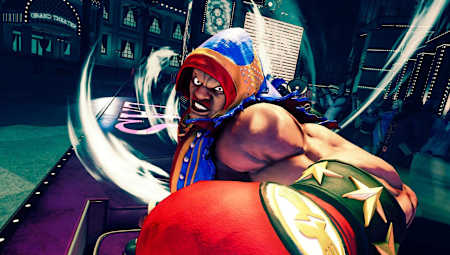
Balrog
© CAPCOM
Peter Rosas, former pro player; producer and community manager at Capcom:
When combos were introduced in "Street Fighter II", that was actually a glitch. But then we saw that it was quite positively received by the players and it suddenly became a staple of "Street Fighter" as well as the fighting-game genre.
The Music
The game’s music was created by Yoko Shimomura, who initially planned to become a music teacher after graduating from the Osaka College of Music in 1988. But as an avid gamer herself, she sent some samples to video game companies and got a call back from Capcom. Her parents were reportedly horrified when she took the job. But the gaming community (and musicians like Flying Lotus and Dizzee Rascal) owe her a debt of gratitude.
Yoko Shimomura, composer for "Street Fighter II":
The game had different scenes from different countries. I suggested making some kind of world music with a comical flavor, and we went with it. For “Blanka’s Song,” I came up with that “ta-ra-ri-ra- rin” melody on the train while I was going to work. I also made all of the sound effects for "Street Fighter II" and recorded all the voices too. I’m so happy that kids from overseas learned Japanese words, like the sumo exclamation "dosukoi", from the game.
Dizzee Rascal, London-born producer and rapper; winner of the U.K.’s Mercury Prize and a Brit Award:
It was a big enough influence to make me want to sample it. In my archive, people who have been into me early on, that’s been their favorite songs. Before I made it onto the TV, when I was just making instrumentals, Street Fighter was a big influence.
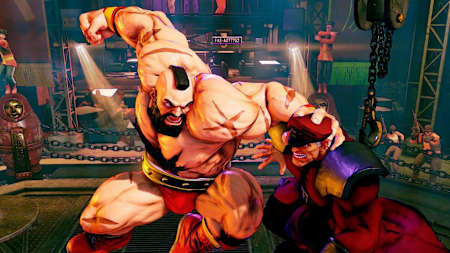
Zangief Fighting
© Capcom
Stephen “Thundercat” Bruner, musician, singer and gamer:
That game’s music made you feel like a champion even if you suck. Even at the end when you die, it’s like the greatest, grandest death ever. How do you even make music that sounds like that?
The First True Champion
When "Street Fighter IV" was released in 2008, many fans had assumed the game series was dead, but Capcom producer Yoshinori Ono campaigned heavily for its revival and formed the team that would bring it back. Butit was one of his countrymen that would elevate the game—and the entire community—to new heights.
Yoshinori Ono:
The biggest reason we released "Street Fighter IV" was because of the media coverage and all of the players who continued to show love for the series. I genuinely wanted to create a game where I could play in the living room while my family excitedly watched from the dining room. The current eSports scene may have been born as a result of this, but I wasn’t thinking about that.
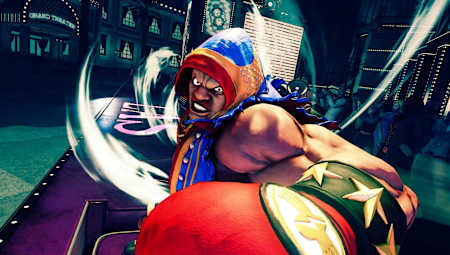
Mid Video Game Capture
© CAPCOM
Matt Dahlgren, Capcom product manager:
It was kind of returning to the series roots, recognizing the special elements of "Street Fighter II" that really made it resonate with this huge audience. He went back to the original world warriors. The focus system, which allowed you to cancel attacks, really created a large variety in play styles.
Adam Heart:
I attended [major tournament Evolution Championship Series] EVO 2007 and the next 9 EVOs after that. I got to participate in EVO when a “large” game had 300 to 400 players. I got to watch these things go from 150-player regional events to 1,000-plus-player regional events.
Daigo “The Beast” Umehara, Street Fighter legend:
Winning EVO 2009 had a huge impact on my life—it made me Japan’s first pro gamer. In 2010, Guinness World Records informed me that I had set a record: Most Successful Player in Major Tournaments of "Street Fighter". What made me happiest wasn’t the award, though. It was the look on my father’s face when he read about it in the newspaper. He had never been totally convinced of my achievements, no matter how many tournaments I won. But such high accolades from the non-gaming world got even his attention.
Patrick Miller, author of the fighting- game guide From "Masher to Master":
Daigo is not beating you because he knows something about the game that you don’t—it’s because he knows something about you that you don’t. It’s like going to a therapist and having them figure out your deepest, darkest shit in two minutes, and then immediately using that information to destroy you. I was lucky enough to play against him once, in a casual match in Tokyo. I took a round off of him, then he woke up and kicked my ass. That’s my most prized moment in fighting games.
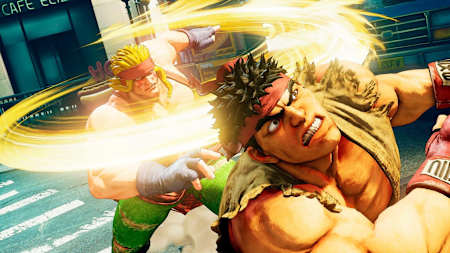
All action
© Capcom
The Community
"Street Fighter II" is credited with creating the fighting-game community—first in Northern California and then gradually nationwide. After that, it was only a matter of time before the top- level scene in Japan—the game’s birthplace—and the upstarts in America clashed.
James Goddard, creator of "Weaponlord"; design director on "Killer Instinct"; co-lead designer on "Street Fighter II Hyper":
It started with simple weekly tournaments at the Golfland arcade in Sunnyvale, California. Suddenly, there were reports of tournaments nationwide. The community grew like wildfire and was so passionate and thirsty for knowledge. Groups of players would drive hours or even states to face other people and learn more strategies. There was no internet back then, folks.
Matt Dahlgren:
Back in the early days of fighting games, there was no livestreaming or Twitch. You had to go to different arcades and find the players themselves to see what was going on, or pass around VHS tapes of tournaments.
Patrick Miller:
When I first started getting serious about fighting games, everyone in America looked up to the Japan scene. They were better at finding stuff than we were. You’d see these super-sweet moves in videos and learn that this character could do this thing, and it seems like that always started in Japan.
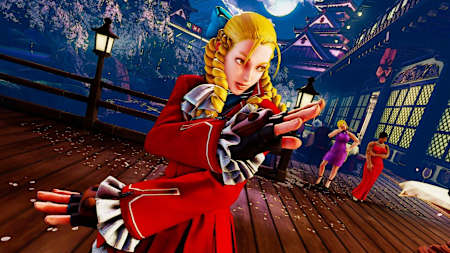
Cammy in mid fight
© Capcom
Peter Rosas:
I think Capcom’s first true involvement with the competitive scene was with the "Street Fighter Alpha 3" World Championships back in the ’90s in San Francisco. They had a national tournament in Japan where Daigo Umehara won. And then there was a national tournament in the U.S., which Alex Valle won, and then they were able to compete. And that was pretty much the first time the U.S. players had seen Japanese players play, and likewise.
Daigo Umehara:
In 1998, I was invited to the "Street Fighter Alpha 3" World Championships in San Francisco. The venue was an arcade in a strip mall. Once the U.S. champion was crowned, they would face the Japanese champion, namely me. I didn’t know the level of competition in the U.S., but I assumed Japanese players were stronger. When I met [Californian] Alex Valle in the world championship, the match was closer than I ever could have expected, but I avoided defeat. The win saved me from embarrassment. I had underestimated my competition.
Peter Rosas:
Bigger tournaments started to form in the U.S. EVO emerged around 2002. Prize pools for the games were essentially based on the number of entrants and then players would get a percentage of that. For events like EVO with 400 entrants, you were looking at something like $2,400 for prizes. Back then, you were playing more for the prestige of being the best rather than for the money.
Big Money
When "Street Fighter" turned 25 in 2012, Capcom put together a tournament series that totaled $500,000 in cash and prizes. Last year, 20-year-old Du “NuckleDu” Dang walked away with more than $230,000 for besting a very competitive field. Capcom also debuted a new edition in the series—"Street Fighter V"—in 2016, which offers a constantly evolving fighting platform that allows players to add new characters as they are created rather than wait for new editions to arrive.
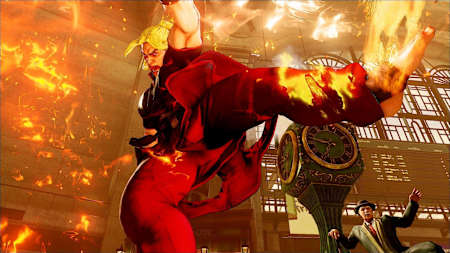
Street Fighter Fire
© CAPCOM
Matt Dahlgren:
We’ve attracted some pretty great sponsors and we’ve been able to increase our prize pools drastically. What really makes the fighting-game community different from all the other eSports stuff out there is that it is so driven by the fans. We forged partnerships with all the existing tournament organizers and helped them out with funding and business strategies so that we could make the entire scene grow. And I think it’s going to continue to grow because of the rise of livestreaming and Twitch. Now you can take these tournaments and actually broadcast them out in real time.
Richard Thiher, program manager eSports, Twitch:
Streaming has slowly transformed players into personalities with varying levels of celebrity. The popularity of streams has also allowed players to develop fandoms, which have created support networks and revenue opportunities.
The popularity of streams has allowed players to develop revenue opportunities.
Adam Heart:
NuckleDu, SonicFox and Punk are the new wave of players who can win often enough to be full-time professionals. A ton of people are trying it ... and I’m pretty sure they are mostly just losing a bunch of money doing so.
Greg Kasavin:
I have kids now, and I love being able to introduce them to all these classic characters. I love that fighting games have been experiencing something of a renaissance in recent years, thanks in no small part to the community’s dedication through events like EVO. Despite the violent subject matter inherent to these games, something about them has a way of bringing people together in what I’ve always felt was a very positive way.
**Some quotes above are attributed to Daigo Umehara's book. "The Will to Keep Winning," and the Red Bull Music Academy's series "Diggin' in the Carts"