
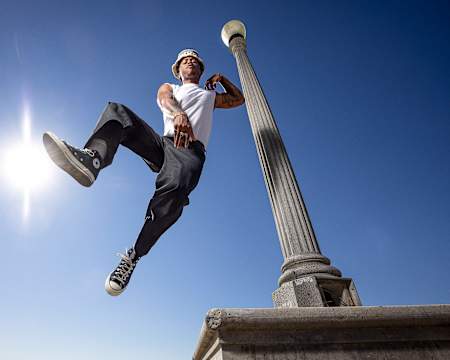
Dance
Krump King
For more than a decade, dancer Darren “Outrage” King has crushed krump competitions around the world, but these days, he’s focused on helping this energetic art form evolve.
Outrage wants to share krump's principles with a new generation.
It’s a winter’s day at the beach in Southern California—meaning it takes no time before professional dancer Darren “Outrage” King peels off his jacket, emblazoned with the words “Death By Style.” His arms are taut after 15 years as a street-style practitioner. In the two years since the pandemic hit and freestyle battles ground to a halt, he’s taken up boxing and Muay Thai to keep his mind occupied and his body fit. Onlookers may not realize they’re witnessing a world-class master of his discipline, krump, a form of hip-hop dance known for its highly energetic, expressive and aggressive movements.
Under the watchful eyes of a photo crew, he now moves his outstretched arms over his head and his feet slide back together with a subtle lock. The sand underfoot makes a frightful sound in protest, but the coarse grains are no match for his smooth control. Beneath the canopy of an impossibly blue sky, he slows down, repeats and then speeds up this motion several times for the camera, as if someone hit the forward/rewind button on an old VHS remote. “Fair Trade” by Drake wafts through the warm air as King chest-pops and crouches like a seasoned pugilist to this vibey strain of hip-hop.
This calm abruptly ends when a neon-colored bicycle approaches with a blaring boom box. The music is ear-splitting, distorting the bass and rendering whatever song it’s blasting barely audible. As he pedals along, the rider yells out a merry greeting at us. Rage breaks momentarily from his krump pose and cracks a smile. “I love that!” he laughs. The 32-year-old is relishing everything about this moment in the sun.
Rage—as he is known to his friends and competitors—grew up in Southern California, so trips to the beach used to be a common occurrence, but about a year ago he bought a townhouse with his girlfriend and moved to Las Vegas. These days he’s more landlocked.
It’s been three years since Rage’s last big dance battle and maybe more since he felt that out-of-body experience, that elusive high that dancers at his level of competition will chase. Psychologists call it the flow state—when you’re so immersed in an activity that everything else dissipates and you reach a heightened state of enjoyment. For competitors, this is the moment the pressure falls away, allowing them to perform better. Artists can access a level of creativity close to godliness. In krump, some dancers have described it as a kind of channeling—of their ancestors.
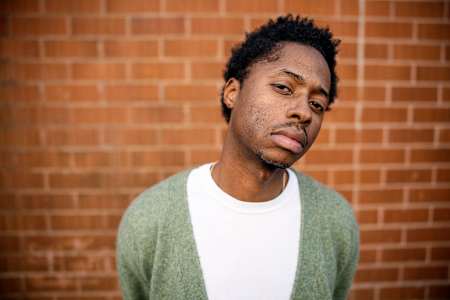
Rage, as he’s known, has won dance battles around the world.
© ATIBA JEFFERSON
Krump emerged from the gritty streets of South Los Angeles in the mid-1990s. The style was born partly in reaction to gangsta rap—a genre of music known for recounting the violent quotidian of its performers and the glorification of their way of life. At the time, cities like Compton and Inglewood struggled with the impacts of guns, violence and poverty. Krump is credited to co-creators and South L.A. residents Ceasare “Tight Eyez” Willis and Jo’Artis “Big Mijo” Ratti. The duo invented krump in the early 2000s as a more aggressive form of clowning—an energetic dance created by Thomas “Tommy the Clown” Johnson, who would perform at children’s birthday parties in L.A. Both dance styles precipitated a desire to get youth off the streets and keep them from falling into gangs.
Sometimes referred to as K.R.U.M.P., the acronym stands for Kingdom Radically Uplifted Mighty Praise. In one of his instructional videos, Tight Eyez proclaims, “There is only one creator of krump and that is God.” But krump also taps into a deeper spirituality for the African diaspora. In the 2005 documentary Rize, filmmaker David LaChapelle compares the face markings on krumpers to African tribal markings and demonstrates their various similarities through jump cuts between dancers in urban settings and African warriors in dusty, sub-Saharan backdrops. Both groups stomp, chest-pop and make these jerky but controlled arm swings—like warriors with spears in battle— suggesting a deep-rooted kinship that crosses oceans and time.
The popularity of Rize helped bring this lively but largely unknown street dance into the mainstream. Soon there were krumpers appearing in music videos with Madonna and Missy Elliott. Lil’ C, one of the krumpers featured in Rize, became a judge on the reality show So You Think You Can Dance. In less than a decade, krump caught on around the world and became codified as a legitimate art form like other aspects of hip-hop, dance and street culture.
Even if the word “krump” isn’t part of your vernacular, you’ve probably experienced elements of it in popular culture, whether it was watching dance competition shows or HBO’s Lovecraft Country, which brought the dance to life with nightmarish results in Episode 8. In it, two characters walk knock-kneed with popping shoulder movements and arm gestures that are common in krump.
The racial aspects of krump’s roots are undeniable. Black practitioners around the world have tapped into the history of slavery and oppression that’s folded into the dance. The flow state for them is sometimes a transgenerational communion with their ancestors.

Rage grew up emulating the dance moves of James Brown and Michael Jackson.
© ATIBA JEFFERSON
For Rage, krump was something he did just for fun, at least in the beginning. The first time he encountered this particular flavor of expressive dance, he was in the eighth grade and attending a performing arts school in San Diego. “I was at a suburban strip mall one day and there was a bunch of kids gathered there,” he recalls. There was such a commotion he naturally thought a fight must have broken out. “Usually when you have a large gathering of people of color like that there’ll be police or security, but this was my first experience being outside with a large group and not having any police break things up.”
As Rage walked toward the crowd, he heard music and then saw other kids doing these energetic dance moves. “They had loudspeakers and were playing hip-hop,” he says. “I didn’t know what it was called.” It turns out they were clowning. As someone who had always enjoyed mimicking dance routines he saw on TV, Rage’s interest was piqued.
When he was very young, Rage loved spending time with his grandfather watching James Brown concert videos. “I noticed that James Brown would do these dance breaks the way bands do guitar solos,” he explains. “[Brown] would take two minutes from his singing just to do a dance solo. James Brown, Ginuwine, all those cats—I would try and imitate them.”
But the first dance move Rage perfected was Michael Jackson’s moonwalk, and the music video for “Smooth Criminal” was a personal favorite. “It kept me so intrigued,” he says, spellbound by the choreography, Jackson’s facial expressions, the narrative arc of the nine-minute video and, of course, the moonwalk. “I liked ‘Thriller’ too,” he chuckles, “but I was also a little scared of it.”
Rage would often get up and perform these moves at block parties and family gatherings in San Diego. A natural performer, he noticed early on that he liked the attention. “When my aunties would ask me to dance, I was never scared to get out there,” he says. “And even back then, I felt like I would do what the song wanted me to do.”
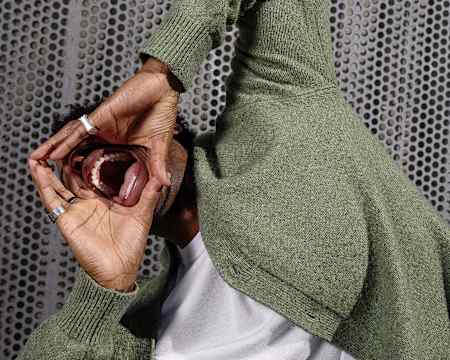
The diversity of krump drew Rage in when he was in high school.
© ATIBA JEFFERSON
His musical tastes were already eclectic in middle school, where he performed in plays, sang in choir and played bass guitar. “I was fortunate to go to a performing arts school with a bunch of different cultures,” he says, “so at that time I was listening to Hawthorne Heights, Panic! at the Disco, Queen, Disturbed and System of a Down on one side—then on the other it was like Jay-Z, Busta Rhymes and Nas.” The genre separation appears black and white, but Rage straddled each side. “I think I got the best of both cultures being able to listen to and understand rock ’n’ roll, punk, emo and then being able to listen to hardcore hip- hop, ’80s-style boom bap, the current boom bap and then radio hip-hop.” All this would play into his dance style later.
Growing up, Rage enjoyed a stable (but not stationary) childhood with younger twin sisters. His mother was a probation officer and his father was in the military, so the family moved around a lot. Rage was born in Kansas, and when he was 4 they moved to Germany, followed by a stint in Washington before landing in Southern California. The constant relocating made it difficult for him to foster strong bonds and lasting friendships.
By the time Rage reached high school, his family was living in Riverside, California. One day he noticed some dancers at school and recognized one of them from an earlier encounter. (“His name was Gabe Sanders, and he became my best friend,” he says.) Guys performed alongside girls. “I was like ‘Wow, this is for everybody!’ ” he says. “I was doing sports at the time—basketball and football—and you know it was cool and all, but here you have girls and guys doing it.”
There was also a multicultural aspect to it that attracted him: “Black, white, Asian, Mexican were doing it as well. And they were all just as dope. I wanted to dance and be in that limelight, but it also drew me in because of all the different cultures.” Rage was inspired by how people were taking and giving back to the culture. “It’s an amazing kind of energy that I’ve never experienced doing anything else,” he says with a smile.
Not long after, he quit his position as a wide receiver on his high school football team. “The chance of being a professional football player was so slim anyway,” he says only half-joking, aware that the odds of being a professional krump or freestyle dancer were virtually non-existent at the time.
But everyone around him loved what he was doing. He describes the different people who would watch them dance in high school: “It attracted people you never would have thought of—the cool kids, the football players and cheerleaders—people you would not think were even into dance. The teachers loved it, and parents, too.”
His own parents, however, were confounded. “They couldn’t see the sense of it,” he laughs. “I mean, we didn’t even know what we were doing. There’s probably zero money in this, but we loved it.”
When my aunties asked me to dance, I was never scared to get out there. Even back then, I felt like I would do what the song wanted me to do.
It’s at this moment that Rage professes he’s a Scorpio. “I’m going to do whatever I want,” he says, his playful tone turning serious. “Nobody can tell me. I have no problems listening, and I got to take everything into consideration. But I was keen on this.” He wanted to krump—and he had no idea what would come of it— but he secretly hoped that there might be some kind of a career for him in dance.
After graduating high school, Rage did battles around Southern California. “It was just for respect, you know, for the streets,” he says, but in 2010 he formally entered How the West Was Won, a professional dance competition, where he competed in its first-ever krump category—and won. After the show he was offered an all-expenses-paid trip overseas. “ ‘We want to bring this to Japan,’ they told me. They wanted me to teach my style of krump there,” he beams. “When I told my parents, they didn’t believe it was a thing!”
By 2012, krump wasn’t as big as other street-dance styles, but there was a steady stream of informal gatherings that were creative, cathartic and vital for the local scene. The 818 Session, held every Wednesday night at a strip-mall parking lot in North Hollywood, was legendary. OG krumpers like Lil’ C and Big Mijo took turns performing inside a circle. “It was super sick!” Rage exclaims, though he admits he was more interested in seeing his friends and peers battle at these sessions. They would stay out all night dancing.
At these sessions, krump was often a physical manifestation of the frustration and anger the dancers were feeling in that moment. Rage explains that if someone had a bad day, you could see it in their dance in creative ways. It was a form of release that made them feel better. As a result, it was always evolving.

Beyond dance, Rage also has his own fashion label, called Death By Style.
© ATIBA JEFFERSON
Krump gives voice to a lot of people who feel like they don’t have a voice.
Today, anyone can learn the basics of krump by watching YouTube or scrolling through social media, but back then you had to pull up in your car and be there. “Nobody had really good cameras for YouTube,” Rage explains. “If you wanted to be a part of the scene, you had to show up. It was all word-of-mouth. People weren’t teaching classes. If you missed one week, the style would have changed the next week. You had to be there and be present. If you weren’t, you were behind.”
During this period he formed a friendship with Marquisa Gardner, aka Miss Prissy, a classically trained ballerina and one of the krumpers featured in Rize. “If there was anyone who had noticed my style of dancing as a hybrid and gave me the chance to shine, it was Miss Prissy. At that time, she had just finished doing the music videos with Madonna [“Hung Up” and “Sorry”], so she was taking krump and giving it a different platform.”
He remembers going to Miss Prissy’s house and staying for days or sometimes weeks just to be around her and observe how she carved out a career in dance. She became a mentor for many dancers trying to forge a similar path. “She didn’t take everybody, but if she liked you, she would take you under her wing,” says Rage, who is still friends with her today. “She definitely paved the way for a lot of people in the game. If it wasn’t for her, I wouldn’t be where I am now.”
It’s been quite the roller-coaster ride for Rage over the past decade, traveling the world as an ambassador of sorts for Team Krump. As fun and rewarding as it’s been, like any job, it hasn’t been without its challenges. He mentions how ego and testosterone can fuel so much of the battling culture. The judges’ decisions can be so arbitrary. He talks about feeling dejected and questioning why he was constantly pushing his body to a physical breaking point. There was also the pressure of going overseas and the expectation to bring the goods to local dance communities. And of course, in battles there’s always a loser.
“It is gambling!” he says of battle culture. “You got to put $20 in and hope you hit the jackpot. And if you don’t, you’re going home super broke.”
About five years ago, Rage found himself bored while judging a krump competition in Las Vegas. The dance moves seemed tired, but worse still, he says that “everyone looked the same, dressed the same, had the same facial expressions and danced to the same tracks.”
When he surveyed the room, everybody else looked equally disinterested. “I don’t want to look like that. I don’t want to look like I’m in here because someone told me how to be,” he says.
And that’s when he had an epiphany. “I’m like, I got to change it up,” he says. “I feel like I’m getting spoon-fed the same thing over and over. So I broke that mold.”
After his judging wrapped for the day, he vowed to do things differently during his own battle later that evening. Tired of constantly having people “shove foundation down his throat and talk of what the style needs to look like,” Rage completely threw out the rule book and freestyled his entire krump battle. He engaged with the audience, looked them in the eye, trash-talked at them—and everyone sat up and paid attention. It was the most fun and free he’d ever felt dancing. And that’s how he’s been doing it ever since.
If you wanted to be a part of the scene, you had to show up. If you missed one week, the style would have changed the next week.
After that breakthrough moment, he won more than a dozen competitions between 2017 and 2018. “From then until when the pandemic hit, I was everywhere,” he says. “So many battles. I was just being me. I was traveling overseas, winning battles and teaching.” He spent months in Korea and Japan and made several trips to Europe. And he was regularly attending dance sessions and gatherings in L.A.
Rage wasn’t as concerned about winning anymore; he just wanted to have a good time dancing. (In fact, he says he learned more from the battles he lost than the ones he won.) His girlfriend of three years, Jaylene Mendoza, who’s also a dancer, nudged him to promote himself more on social media and try out for different things like commercials and TV shows.
He did a bunch of music videos, appeared in ad campaigns for Gap and Puma and even had a stint on the Netflix show Dear White People, alongside Jaylene. The couple played a pair of dancers in the final season and still get checks for residuals. “I don’t mean to make it about the money, but it matters,” he says.
Still, he has a soft spot for freestyle battles. So when he was picked as a wildcard to participate in the 2021 Red Bull Dance Your Style World Final in Johannesburg, South Africa, in December, he was thrilled. After more than 80 qualifying events around the globe, the final in Johannesburg would feature battles between the world’s best street dancers, and Rage saw this opportunity as a culmination of everything that he’d been doing up to that point. But then the World Final was canceled due to public health concerns and international travel restrictions, and Rage missed out on the chance to feel that feeling again—that higher state of consciousness.
“Plus, it’s the motherland,” he says. “I’ve never been, so just to be there and get a taste of that cultural essence would have been phenomenal.” Trying not to sound too disappointed, he adds: “But I know when it does happen, it will be 10 times bigger.”
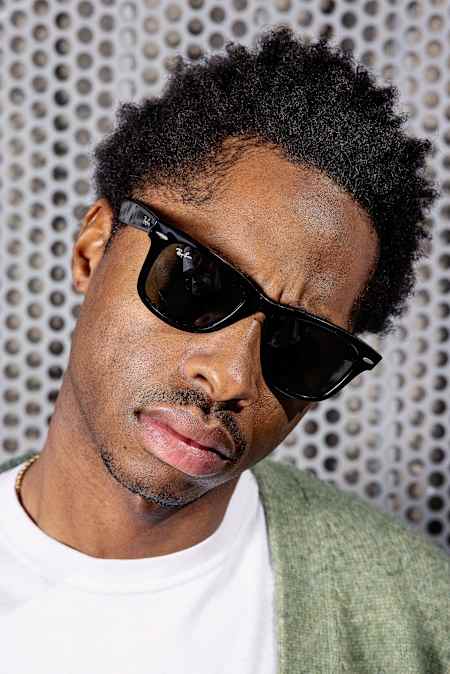
“If you wanted to be a part of the scene, you had to show up.”
© ATIBA JEFFERSON
The last few years have been tough, especially for those in dance. But Rage is enjoying his new home in Las Vegas. It’s a change of scenery, and with the lower cost of living it’s also less stressful. He’s excited about launching a new collection for his own clothing brand, Death By Style. His parents, who initially couldn’t understand why he’d moved to Nevada, have been visiting him and warming up to it. More importantly, the dance scene there is young, and Rage feels he can help develop it.
Three times a week Rage teaches at the Rock Center for Dance—a premier training studio for adults and kids—but he claims that he’s the one who is learning how to do pirouettes from the little ballerinas in his class. He regrets not having studied ballet or jazz when he was younger. It wasn’t an issue of money—he feels sure his mother would have obliged him—but because he was never open to the idea.
When he teaches his fluid style of krump and hip-hop, which he feels can simply be classified under the umbrella of “dance,” he is never didactic. He wants his students to be open, to trust their instincts, learn to improvise and put their own personality into the steps he teaches them. “Everyone dances from a different place,” he says, acknowledging that people have different body types and strengths— and different reasons for wanting to dance. “At the end of the day, you don’t want robots or textbook dancers. You want people who understand the feeling.”
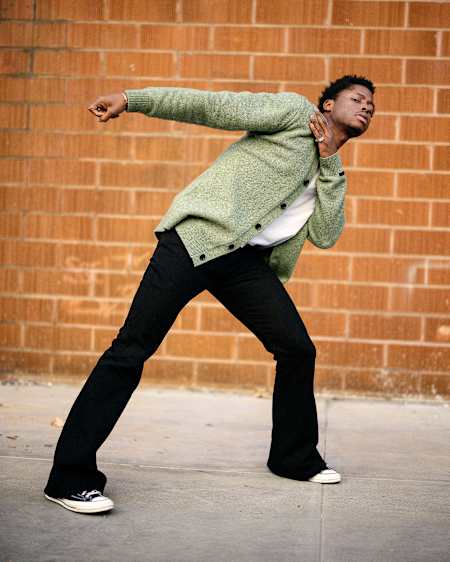
Three times a week, Rage teaches at the Rock Center for Dance in Las Vegas.
© ATIBA JEFFERSON
And he remembers how he came to krump when it was in the midst of breaking away from clowning. “Clowning still has a special place in my heart, but evolution is inevitable. Either you stay back or you evolve with it.”
Go down the YouTube rabbit hole and you’ll uncover tons of krump how-to videos, where many people posture that “krump is life.” At this mention, Rage shakes his head, dismissing the hyperbole, then says quietly: “I think life is life. And I think life is what you make it.” To him, krump has afforded him a certain freedom, a way of life, enduring friendships, a larger global community. But the key to all that, he says, “is being able to do and say what you mean in a truthful and artistic way.”
“Obviously some people have had it harder than others, and for them it was an escape from reality, I get that,” he says, referring to those in the scene who’ve struggled with oppression. “[Krump] gives voice to a lot of people who feel like they don’t have a voice. It gives light to people who feel like they could never have light. Krump used to be an escape for me, but I don’t look at it as an escape anymore. It’s a presence. It’s a feeling. It’s an energy.”
At this point, Rage has been talking about himself for an hour or so. When he first sat down after spending time at the beach, he sung sonorously into the tape recorder, joking about landing a record deal. But now he’s fallen silent, reaching to find a way to describe something that began as a way to hang out with friends but evolved into something deeper for him as an adult. Now, krump is a mental state of being that informs his life, and he wants to share all this knowledge with a younger generation because of its potential for change. “I wish people did it for us when we were growing up,” he says.
After saying his goodbyes to the photo crew, Rage makes his way to the car with Jaylene for the long drive back to Las Vegas. Tomorrow he has classes to teach and young minds to mold.
Keep up with Outrage:
Be sure to follow the Red Bull Dance Your Style 2022 season on @RedBullDance


